



PLID: The Hidden Cause of Your Back Pain You Should Know
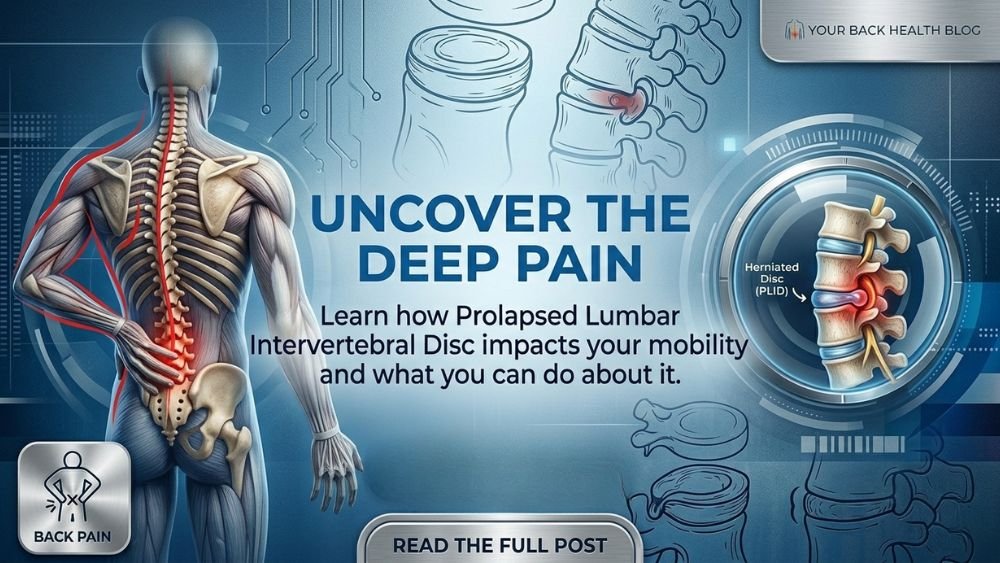
Do you wake up every morning with stabbing lower back pain? Does your leg go numb without warning? Does walking even a short distance feel unbearable? If yes, this article is written for you.Millions of people suffer through this pain every day. Most never find out what is truly causing it. They take painkillers, rest for a few days, and hope it goes away. But the pain keeps coming back. Stronger each time. And there is always a specific reason behind it. That reason is called PLID. It stands for Prolapsed Lumbar Intervertebral Disc.
What Exactly Is PLID?
To understand this condition, you need to first understand your spine.
Your spine is made up of small bones called vertebrae. They are stacked on top of one another like building blocks. Between each pair of bones sits a soft, cushion-like structure called an intervertebral disc. Think of it like a jelly donut. The outside is tough and fibrous. The inside is soft and gel-like.
These discs act as shock absorbers. They allow you to bend, twist, and move freely. Without them, your bones would grind against each other.
Here is where the problem starts. When the tough outer ring of a disc becomes weak or damaged, the soft inner gel pushes outward. This is called a prolapse. When it happens in your lower back, the condition is called Prolapsed Lumbar Intervertebral Disc. The bulging disc then presses on nearby spinal nerves. That pressure causes the pain, numbness, and weakness so many patients experience.
If you are already experiencing these symptoms, Asst. Prof. Dr. SMA Alim is a trusted specialist who can guide you toward the right treatment.
Who Is at Risk?
This condition can affect anyone. Office workers, construction workers, athletes, and homemakers all develop it. But some people face a much higher risk.
People aged 30 to 50 are most commonly affected. This is when discs begin losing hydration and flexibility naturally. Men are slightly more likely to develop it than women.
Other high-risk groups include people who sit for long hours without proper posture, those who lift heavy objects incorrectly, individuals who are overweight, and people who smoke. Genetics also plays a role. If your parents had disc problems, your risk is higher too.
Warning Signs You Should Never Ignore
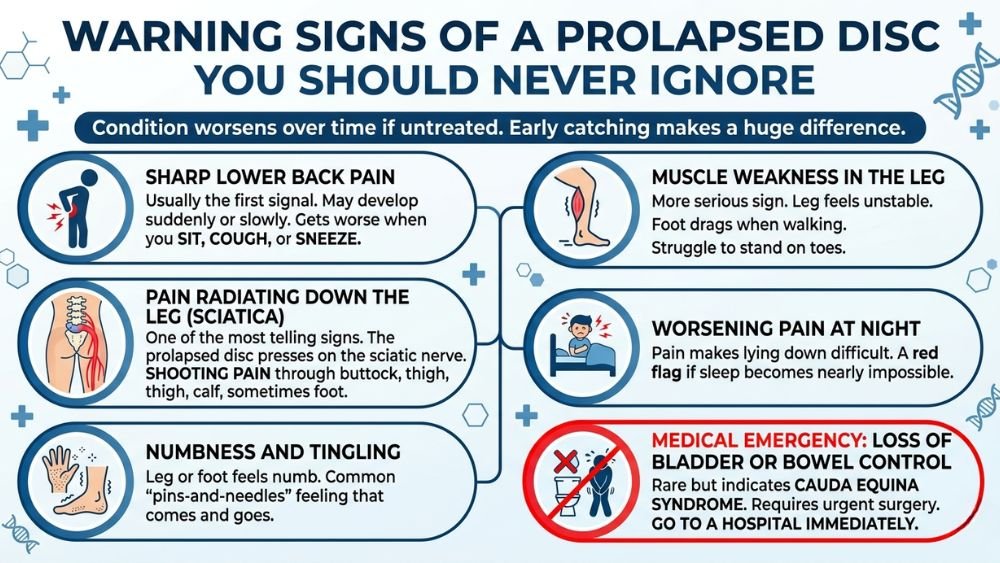
This condition worsens over time if left untreated. Catching the signs early makes a huge difference.
Sharp lower back pain is usually the first signal. It may come on suddenly or develop slowly over weeks. It often gets worse when you sit, cough, or sneeze.
Pain radiating down the leg is one of the most telling signs. The prolapsed disc presses on the sciatic nerve. This sends shooting pain through the buttock, thigh, calf, and sometimes the foot. This pattern is called sciatica.
Numbness and tingling in the leg or foot are very common. Many patients describe a pins-and-needles feeling that comes and goes without warning.
Muscle weakness in the leg is more serious. If your leg feels unstable, your foot drags when walking, or you struggle to stand on your toes, nerve compression is significant.
Worsening pain at night is another red flag. Many patients find that lying down makes the pain even worse. Sleep becomes nearly impossible.
Loss of bladder or bowel control is rare but a medical emergency. If this happens, go to a hospital immediately. This is called Cauda Equina Syndrome and requires urgent surgery.
What Causes This Condition?
Knowing the causes helps you understand your situation. It also helps you prevent things from getting worse.
Age-related disc degeneration is the most common cause. As you age, your discs lose water and become stiff. They tear more easily under pressure. This process can begin in your late twenties.
Improper lifting technique is a major trigger. Bending at the waist to lift something heavy puts enormous pressure on your lumbar discs. One wrong lift can cause a prolapse instantly.
Prolonged sitting or standing keeps sustained pressure on your lower back. Office workers hunched over screens for hours are especially vulnerable.
Excess body weight adds constant stress to the lumbar spine. Every extra kilogram multiplies the load on your discs significantly.
Smoking cuts blood flow to the spinal discs. They are deprived of oxygen and nutrients. Smokers develop disc degeneration far faster than non-smokers.
Repetitive physical strain from sports or heavy labor slowly wears down the outer disc ring. Eventually it can no longer contain the inner gel.
How Is It Diagnosed?
See a qualified doctor if you suspect this condition. An orthopedic specialist, neurologist, or spine physician is your best starting point. They will examine your reflexes, muscle strength, and leg sensation.
An MRI scan is the gold standard for diagnosis. It shows exactly where the disc has prolapsed and which nerves are being compressed. An X-ray cannot show disc prolapse directly. However, it can rule out fractures or bone disease. A CT scan or nerve conduction study may also be needed in some cases.
For an accurate diagnosis from an experienced specialist, you can consult Asst. Prof. Dr. SMA Alim, who has extensive experience treating complex spinal conditions including PLID.
Treatment Options
Here is the most reassuring fact about this condition. Around 80 to 90 percent of cases improve without surgery. You do not automatically need an operation.
Rest and activity modification helps during the acute phase. It calms inflammation. However, complete bed rest is not recommended. Gentle movement actually speeds up recovery.
Medications such as anti-inflammatory drugs, pain relievers, and muscle relaxants reduce pain and nerve swelling effectively.
Physiotherapy is one of the most powerful recovery tools available. A skilled physiotherapist creates a personalized exercise plan. It strengthens the muscles around your spine, corrects posture, and reduces disc pressure. It also teaches you how to move safely in everyday life.
Epidural steroid injections deliver anti-inflammatory medicine directly around the compressed nerve. They provide strong pain relief. They also allow patients to participate more actively in physiotherapy.
Surgery is considered only when other treatments have failed. It is also necessary when neurological weakness is progressing or when Cauda Equina Syndrome is present. The most common procedure is a microdiscectomy. It is minimally invasive, highly successful, and has a short recovery time.
How to Prevent It
Prevention is always better than treatment. These simple habits can lower your risk significantly.
Sit with your back straight and feet flat on the floor. Never hunch over for long periods. Bend your knees when lifting anything from the ground. Keep the object close to your body. Never twist your spine while lifting. Stand up and walk for a few minutes every half hour if you sit at a desk. Keep your body weight in a healthy range. Strengthen your core through exercises like planks and swimming. A strong core protects your spine every day. If you smoke, quitting is one of the best things you can do for your spinal health.
Final Thoughts
Prolapsed Lumbar Intervertebral Disc is not a life sentence. With early diagnosis and proper treatment, most people return to a full and active life. Your pain is real. It deserves real attention, not just painkillers that mask the problem.
Do not wait any longer. Reach out to an Interventional Pain specialist today. Asst. Prof. Dr. SMA Alim offers professional consultation, accurate diagnosis, and a personalized treatment plan that targets the true root cause of your pain.